Where to Live in Cyprus: Pros and Cons of Paphos, Limassol, Larnaca and Nicosia
More than nine in ten people in the government-controlled part of Cyprus live in four districts: Nicosia, Limassol, Larnaca and Paphos. The 2021 census counted about 350,000 residents in Nicosia district, 262,000 in Limassol, 156,000 in Larnaca and 101,000 in Paphos. The cities are less than two hours' drive apart, yet they offer noticeably different lives.
There is no single best place to live in Cyprus. Each city gives something and charges for it, and the choice comes down to four trade-offs: sea and climate, work and schools, access to an airport, and the price of a home. The useful question is which of the four a household can most easily give up.
In short
Limassol has the most international private-sector work and the most English-language private secondary schools (ten), but the highest rents and heavy daily traffic.
Paphos has its own airport, the mildest summer of the four (around 30°C in August) and the highest share of foreign residents, at 40% of the district in 2021, but fewer office jobs and a quiet winter.
Larnaca has the island's main airport about ten minutes from town and lies within an hour of Nicosia and Limassol, but its port and marina redevelopment runs on a timetable to 2045.
Nicosia is the capital, with the most universities and lower rents than Paphos or Limassol, but no sea and the hottest summers, at around 37°C in August.
How the four cities compare
Set side by side on the same measures, the four cities look like this:
School counts are the private secondary schools teaching in English that appear in the Ministry of Education's fee tables for 2026–27.
On price, two independent sources agree on the order. Asking rents for a two-bedroom apartment in September 2026 were about €900 in Nicosia, €1,400 in Paphos and €2,100 in Limassol, according to Global Property Guide figures reported by the Cyprus Mail. Crowd-sourced data from January 2026 ranked the three the same way.
Prices also move at different speeds. In the year to the second quarter of 2026, the Central Bank's residential price index rose 9.8% in Larnaca, 9.6% in Paphos, 7.8% in Limassol and 5.7% in Nicosia. The index measures change, not level, so it shows where prices are rising fastest rather than where they are highest.
Limassol: the most to do, at the highest price
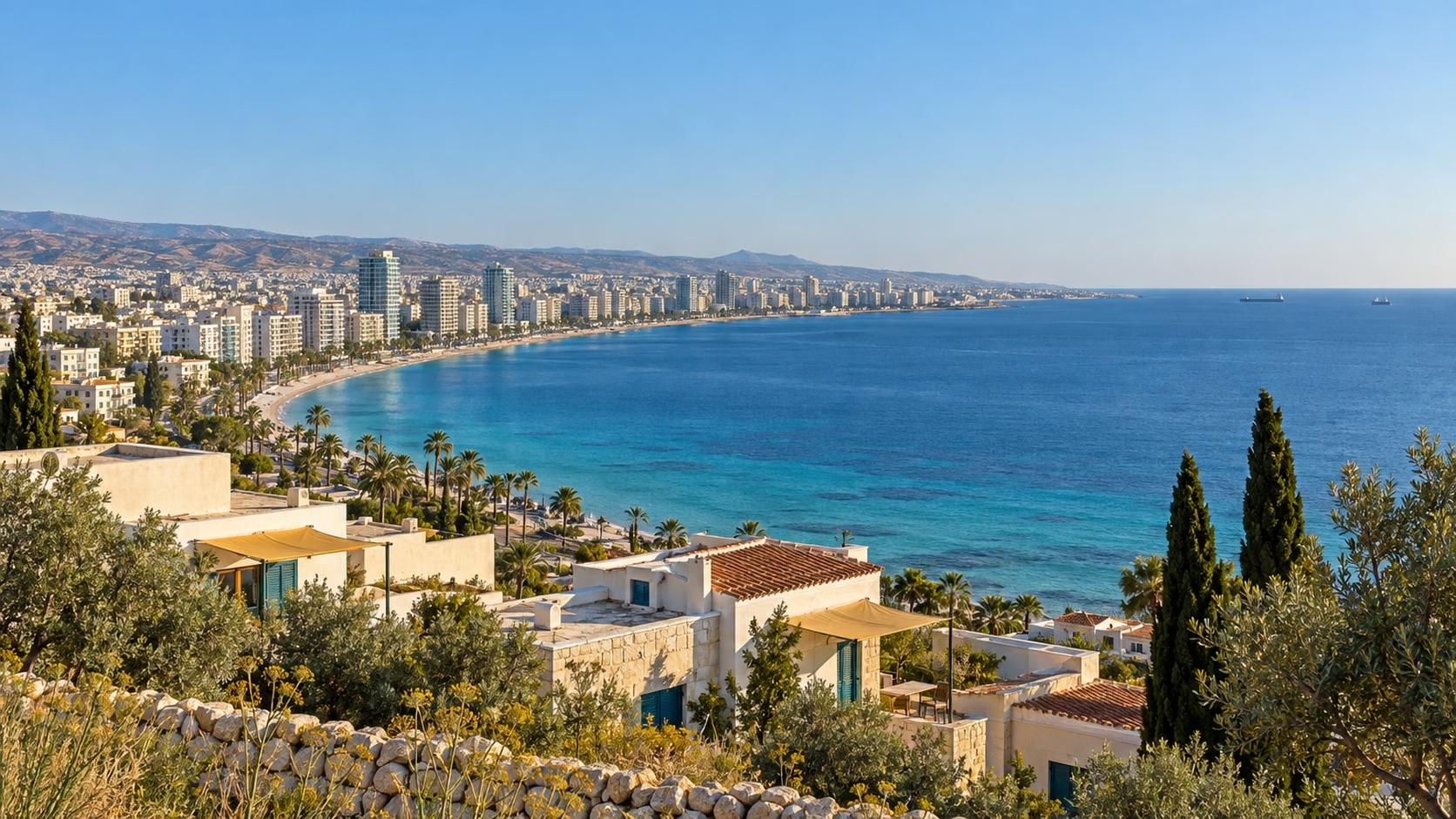
Limassol is the island's commercial centre, home to much of its shipping, professional services and technology business. That brings work, a large international population and the widest choice of English-language education: ten private secondary schools teach in English, more than in any other city, and the Cyprus University of Technology is based there. Both airports are around 45 minutes away.
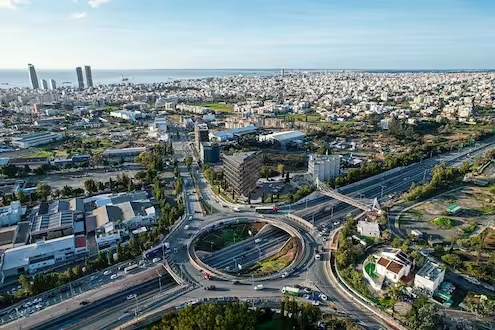
The price is paid in money and time. Limassol has the highest rents and property prices on the island, and the gap with the other cities is wide. Traffic has become a daily cost: the city's chamber of commerce has warned that congestion threatens growth, and the government is preparing road projects worth around €500 million.
The seafront is densely built, and towers increasingly line it. INEX Group's Beon Limassol project is one example of the newer residential stock in the city.
01/0
No items found.
Sales Manager at INEX
Anna Kaploukha
Discuss Homes in Paphos and Nearby Villages
Thank you!
We will reach out soon.
Oops! Something went wrong while submitting the form.
Paphos: space, sea and the most international district
Paphos gives more room for the money than Limassol and a gentler climate. It has its own airport, the mildest summer of the four cities, and the highest share of foreign residents on the island: 40% of the district's population in 2021.
That international character shapes the property market. British buyers lead foreign purchases in the district, according to figures presented to parliament in 2025, and foreign buyers accounted for 66% of property sales there in the second quarter of 2026. English is widely spoken, and the town has a general hospital and several private ones.
The costs are quieter but real. Tourism is still the base of the local economy, so office jobs are fewer than in Limassol or Nicosia, and the winter is noticeably slower. Public transport between the town and the surrounding villages is limited, so most residents depend on a car.
Four private secondary schools in the district teach in English, among them Lumio, an IB World School near the town, so the choice for teenagers is narrower than in Limassol or Nicosia. And prices are rising fast: Paphos apartment prices rose 18.5% in the year to mid-2026.
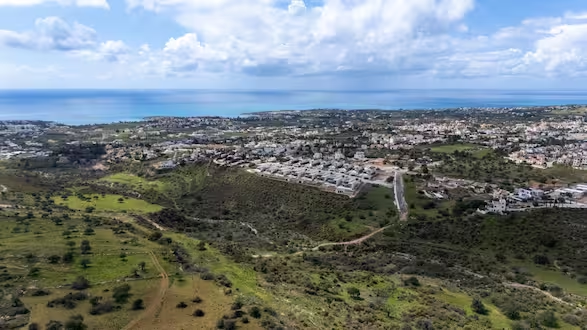
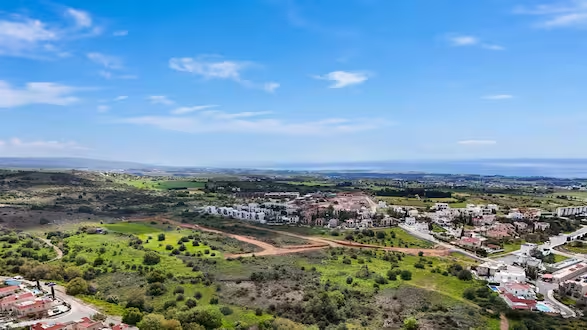
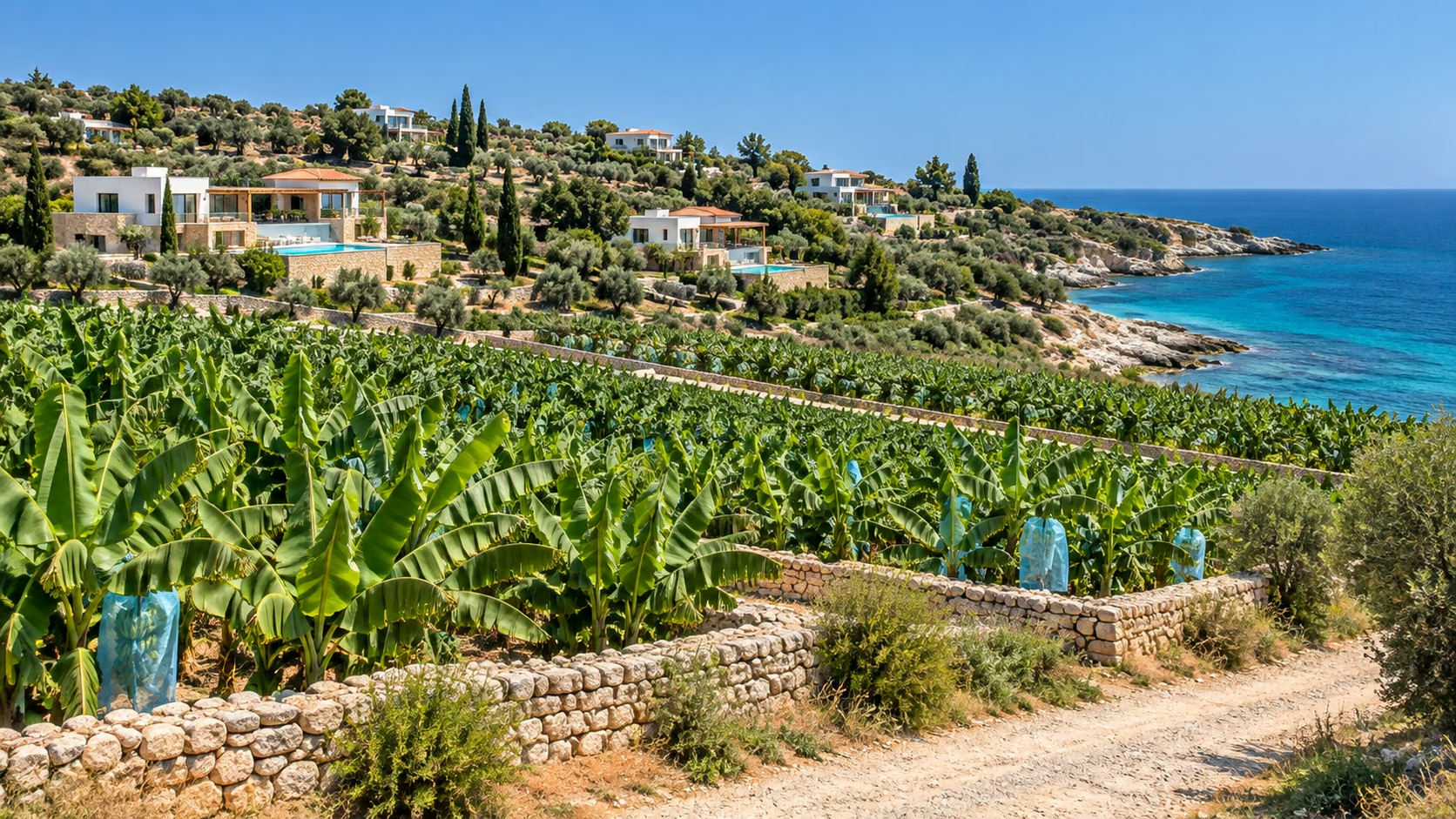
Much of the appeal lies outside the town itself, in villages such as Pegeia, Konia and Coral Bay, where newer homes look over the coast. More detail on the town and its districts is on the Paphos location page.
01/0
No items found.
Paphos: space, sea and the most international district
Paphos gives more room for the money than Limassol and a gentler climate. It has its own airport, the mildest summer of the four cities, and the highest share of foreign residents on the island: 40% of the district's population in 2021.
That international character shapes the property market. British buyers lead foreign purchases in the district, according to figures presented to parliament in 2025, and foreign buyers accounted for 66% of property sales there in the second quarter of 2026. English is widely spoken, and the town has a general hospital and several private ones.
The costs are quieter but real. Tourism is still the base of the local economy, so office jobs are fewer than in Limassol or Nicosia, and the winter is noticeably slower. Public transport between the town and the surrounding villages is limited, so most residents depend on a car.
Four private secondary schools in the district teach in English, among them Lumio, an IB World School near the town, so the choice for teenagers is narrower than in Limassol or Nicosia. And prices are rising fast: Paphos apartment prices rose 18.5% in the year to mid-2026.
Much of the appeal lies outside the town itself, in villages such as Pegeia, Konia and Coral Bay, where newer homes look over the coast. More detail on the town and its districts is on the Paphos location page.
Larnaca: the airport city in transition
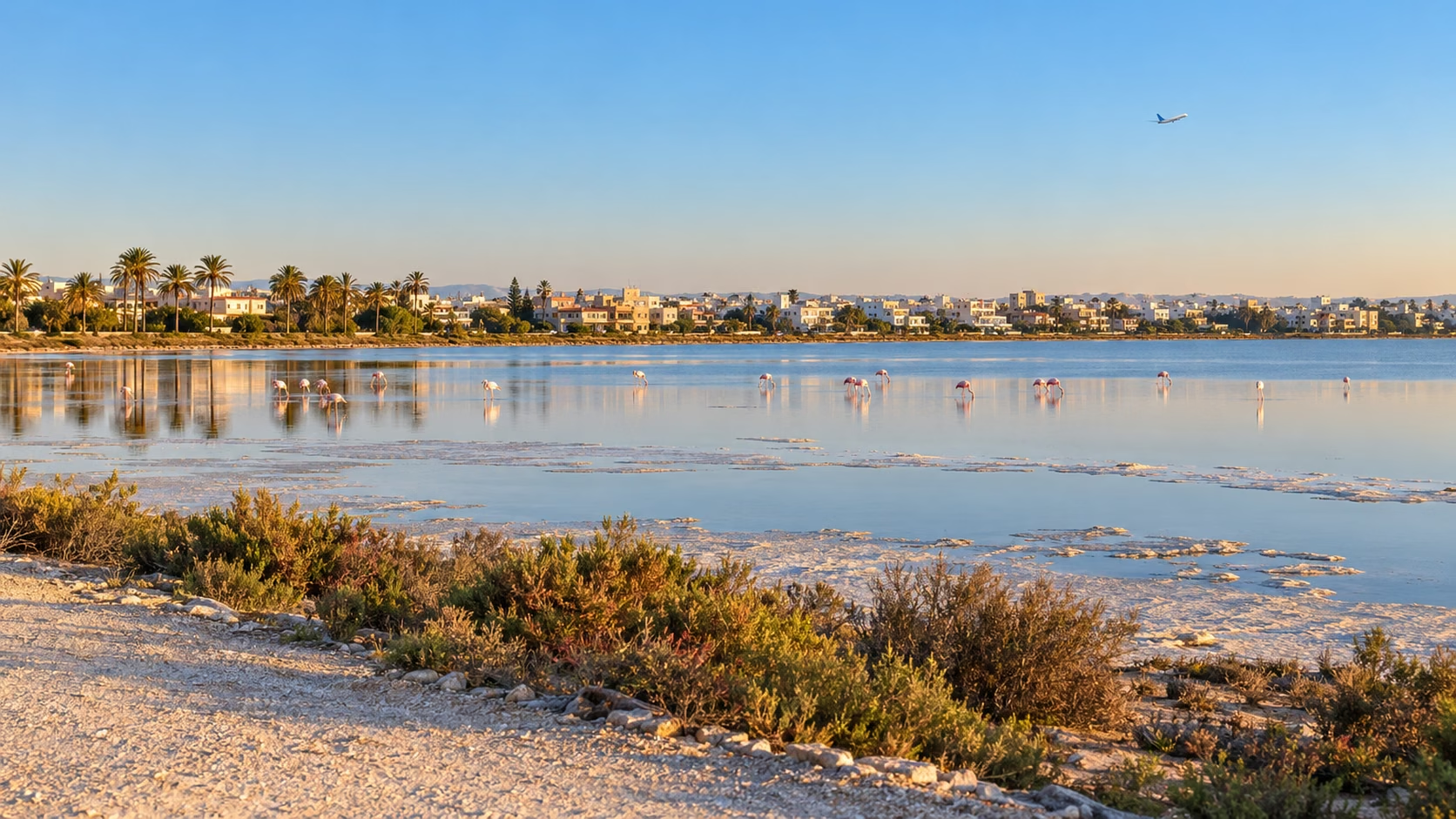
Larnaca's advantage is position. The island's main airport, which handled 9.9 million passengers in 2025, is about ten minutes from the town, and both Nicosia and Limassol are within an hour. For anyone who travels often, or who works in one city and wants a coastal home within reach of it, that combination is the main reason to choose it.
The town is still taking shape. A redevelopment of the port and marina worth around €415 million runs on a timetable stretching from a master plan by 2029 to new berths by 2045, after an earlier concession was terminated in 2024. On that schedule, the finished waterfront is still many years away. Larnaca district has three English-language private secondary schools, so families with teenagers may need to weigh the commute to Nicosia or Limassol.
Nicosia: the capital, without the sea
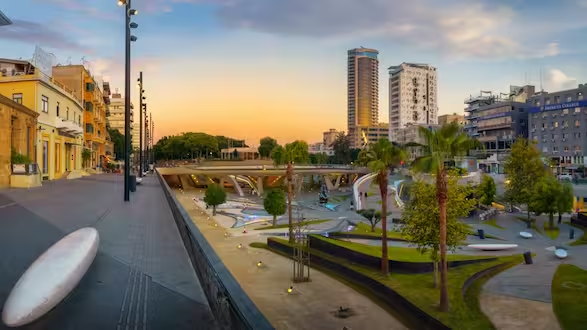
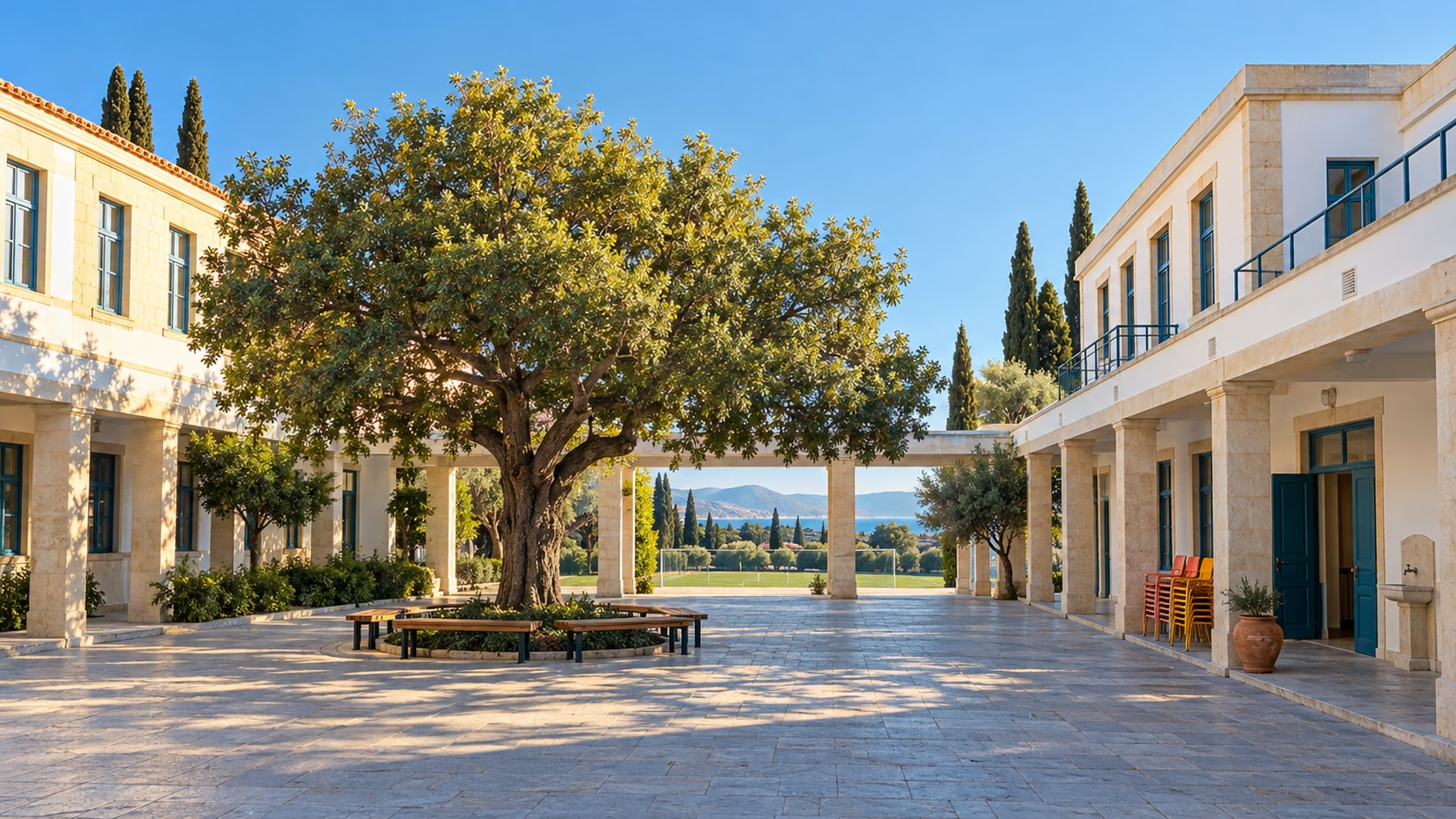
Nicosia has the deepest pool of public-sector and banking jobs: government, the central bank, the major banks and a long list of services. It also has the most universities, nine private secondary schools teaching in English, including the English School, and the island's main children's hospital. Asking rents are lower than in Paphos or Limassol, and life is more local: 84% of property sales in the second quarter of 2026 went to Cypriot buyers.
What Nicosia lacks is the coast. The nearest beaches are around 45 to 50 km away, and the inland plain makes it the hottest city in summer, with average August highs around 37°C, and the coldest on winter nights. It is also a divided capital, with the buffer zone running through its old centre. More on the city is on the Nicosia location page.
Paphos or Limassol
The comparison most buyers end up making is between the two western coastal cities, about 45 minutes to an hour apart.
Limassol suits a household whose income depends on the local economy or on international business, and whose children need a wide choice of English-language secondary schools. It is the more urban of the two, with more restaurants, more culture and more of everything, including cost and traffic.
Paphos suits a household that brings its income with it, through a pension, remote work or investments, and values space, a slower pace and an established English-speaking community. It costs less to rent, by the September 2026 listings, and it has its own airport, but local office work is thinner and the winter quieter.
Worth knowing: Paphos prices have been rising faster than Limassol's. The Central Bank index rose more in Paphos over the year to mid-2026, and Paphos apartments rose 18.5%. Buying on the assumption that today's price gap will hold carries a risk.
Matching the city to the move
The same trade-offs point different households in different directions:
Retirees tend to choose Paphos or the villages around it, for the climate, the airport and the established British community.
Families with secondary-age children usually start in Limassol or Nicosia, where most English-language private secondary schools are.
Remote workers have the widest choice; Larnaca and Paphos give the easiest flights, Limassol the most social life.
Professionals hired locally follow the job: Limassol for shipping, funds and technology, Nicosia for government, banking and services.
Buyers investing for rental income weigh Limassol's high rents against its high entry prices, and the faster price growth in Paphos and Larnaca against more seasonal demand.
The island as a whole has its own strengths and drawbacks, from salaries to bureaucracy, set out in the guide to the pros and cons of living in Cyprus.
Choosing the trade you can live with
Every city on the island asks for a compromise, and the right one depends on where a household's income comes from, the age of its children and how often it needs to fly. A week in January and another in August, spent in the city and the neighbourhood under consideration, tells more than any comparison. For buyers drawn to the west of the island, INEX Group can talk through homes in Paphos and the villages around it.
Share
Rate this article
Author of the article:
Sales Manager at INEX
Anna Kaploukha
Frequently asked questions
Where do most expats live in Cyprus?
Paphos district has the highest share of foreign residents, at 40% of its population in the 2021 census, followed by Limassol at 22%, Larnaca at 19% and Nicosia at 17%. In absolute numbers, Limassol and Nicosia hold larger international communities than Paphos, because their populations are much bigger.
Is Paphos or Limassol better for families?
It depends on the children's ages. Limassol has ten English-language private secondary schools to Paphos's four, which matters for teenagers. For younger children, Paphos offers more space and a calmer pace at lower rents.
Which Cypriot city is cheapest to live in?
Of the cities covered by September 2026 rental listings, Nicosia had the lowest asking rents and Limassol the highest, with Paphos in between. Prices vary widely within each city, so the neighbourhood matters as much as the town.
Which city has the best weather?
Paphos has the mildest summers, with average August highs around 30°C, while Limassol has slightly warmer winter nights. Nicosia, inland, is the hottest in summer at around 37°C and the coldest on winter nights.
Is Nicosia a good place to live without the sea?
For many people, yes: it has the most universities, a deep job market and lower rents. The trade-off is heat in summer and a drive of around 45 to 50 km to the nearest beaches.
How far apart are the main cities?
Limassol is about 45 minutes to an hour from Paphos and from Larnaca, and Larnaca is around 40 minutes from Nicosia. Paphos to Nicosia is the longest common drive, at roughly an hour and a half or more.