Pros and Cons of Living in Cyprus: An Honest Assessment
Cyprus attracts three kinds of newcomer: families leaving northern Europe for a milder climate, retirees drawn by the pension treatment, and business owners or remote executives who value the island's tax residency rules. Around 30,000 British nationals already live on the island, and in Paphos roughly 40 percent of residents were born abroad.
Most of what is written about moving to Cyprus leans heavily on the sunshine. The reality is more balanced. The island offers genuine, measurable advantages — and drawbacks that disappoint those who arrive unprepared. Weighing both honestly, before committing, is what separates a good move from an expensive lesson.
The advantages: what Cyprus genuinely does well
Climate and pace of life
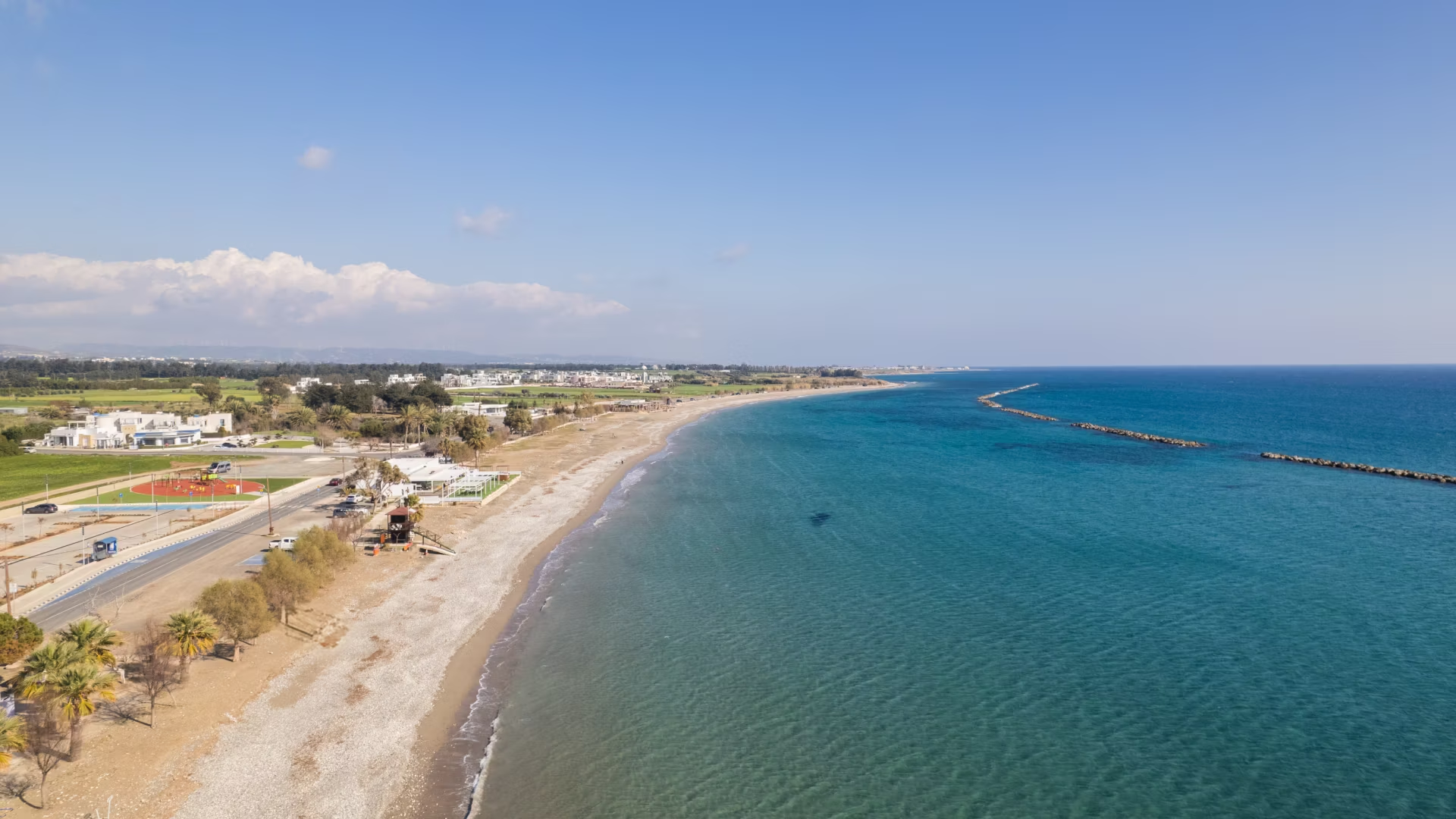
Cyprus records over 300 days of sunshine a year. Coastal winters stay mild, which means outdoor living — terraces, sea swims well into November, year-round golf — is a daily reality rather than a holiday memory. The pace is slower and less pressured than London or Frankfurt — most newcomers grow to like that, though it takes adjustment.
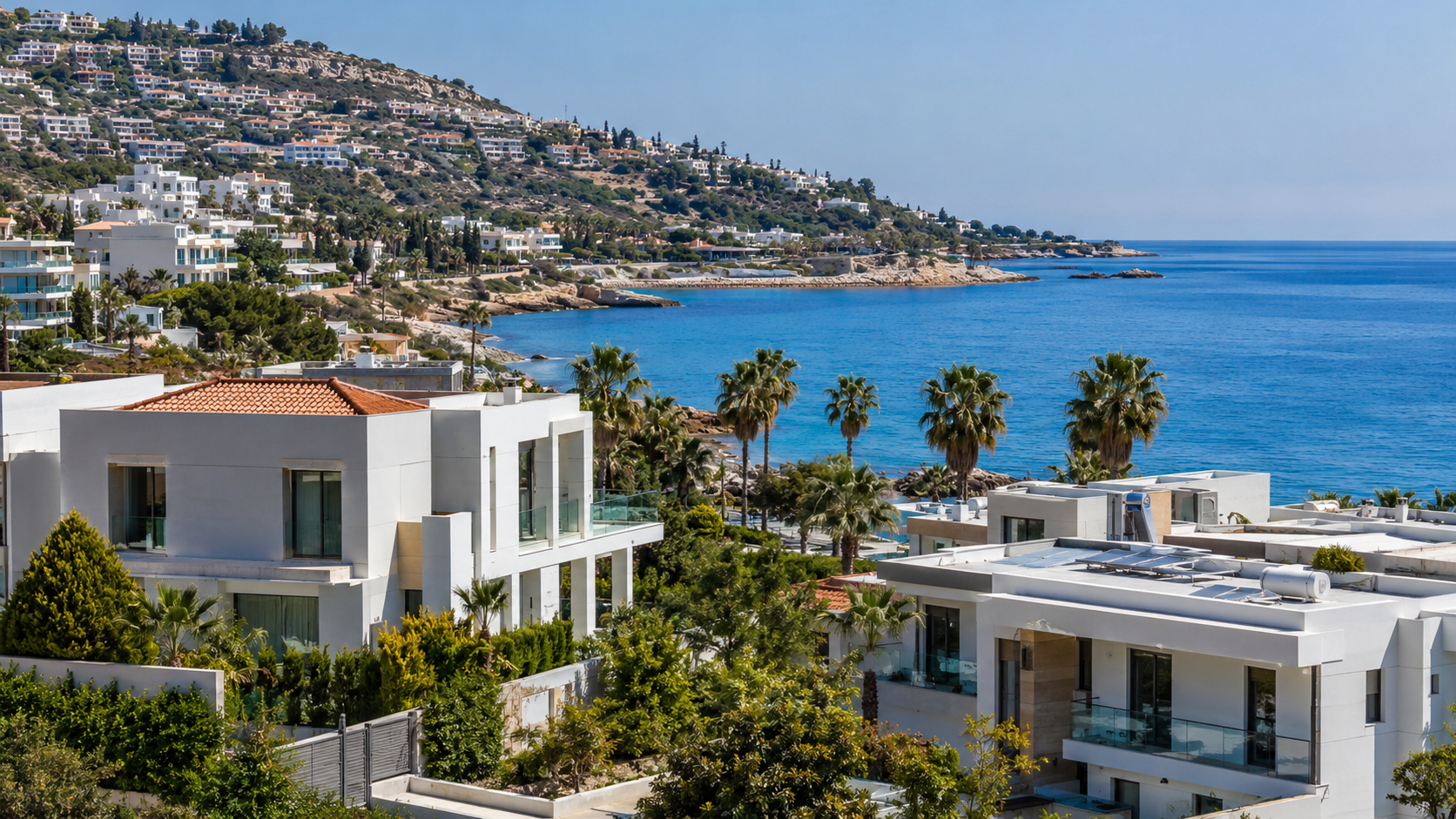
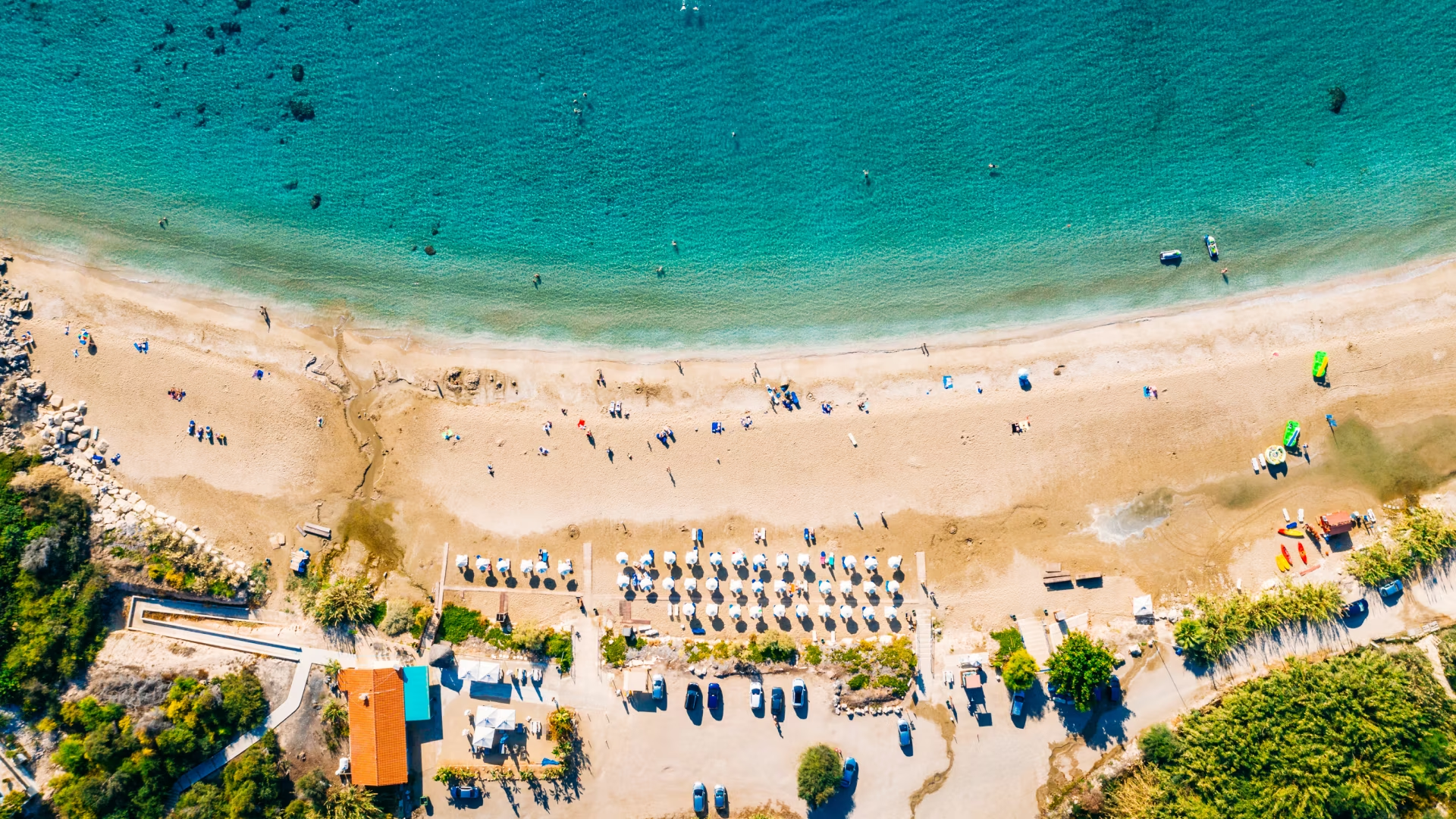
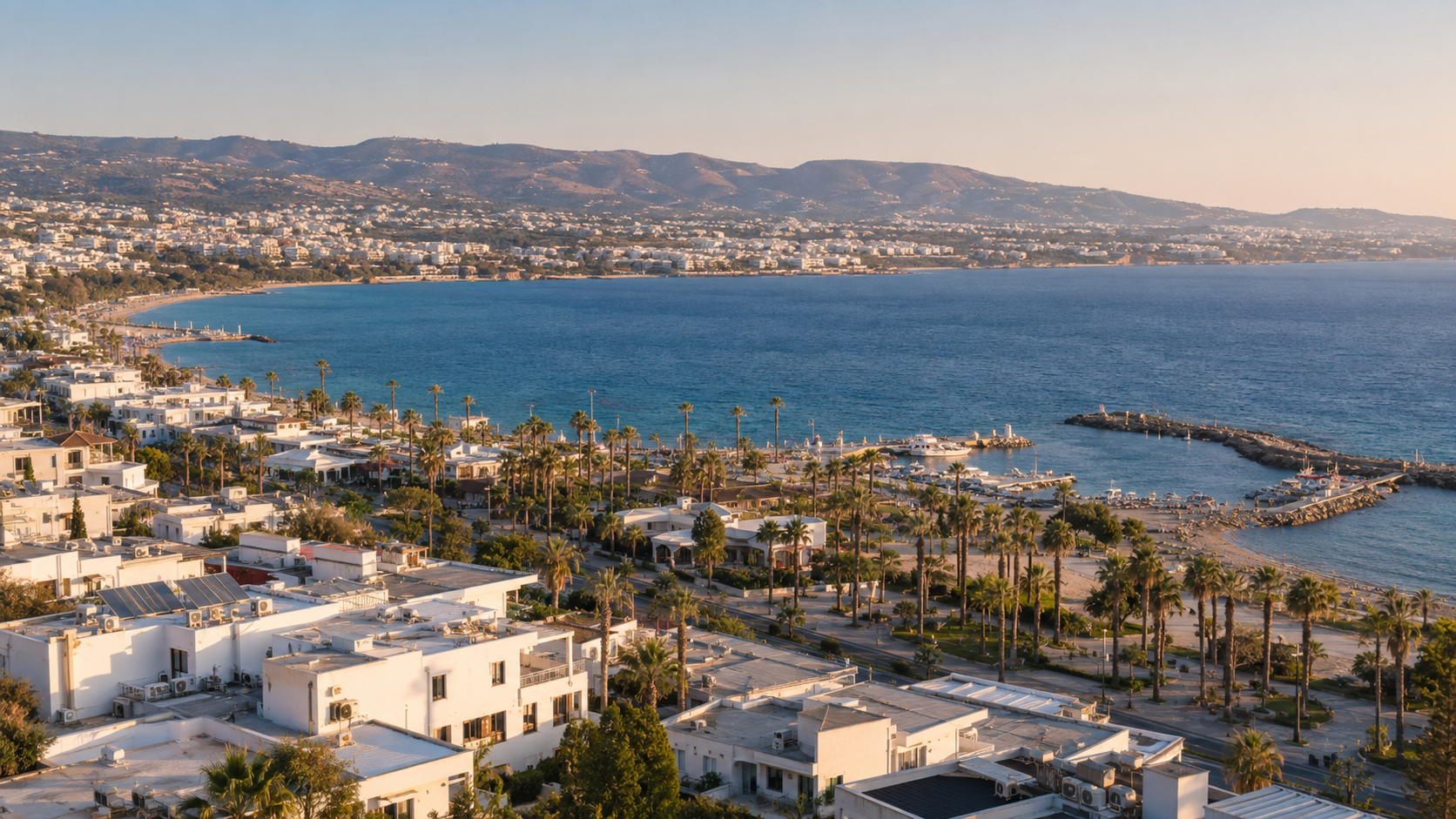
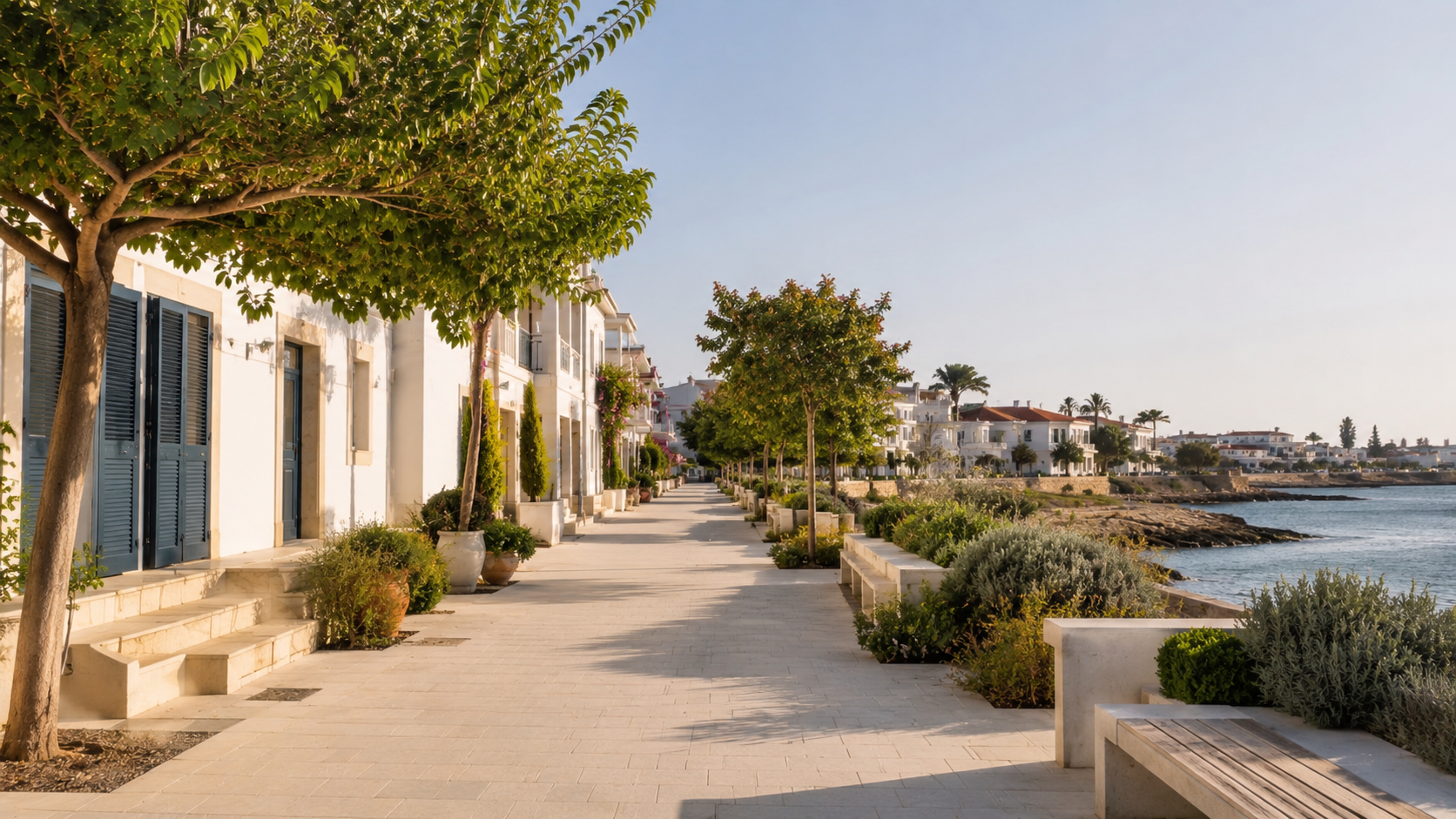
The island's amenities have grown with its international community: marinas, international dining, padel and tennis clubs, and coastal areas such as Coral Bay, known for its sandy beaches and clear water, where daily life is organised around the sea.
A tax regime that still rewards residents
Cyprus overhauled its tax system in January 2026, and the result is still competitive. Personal income is tax-free up to €22,000, and the top rate of 35 percent starts only above €72,000. New residents who qualify as non-domiciled pay no tax on dividend and interest income — a status that runs for 17 years and, under the reform, can be extended for a fee. Corporate profits are taxed at 15 percent, in line with the OECD minimum.
Two rules matter most for new arrivals. First, the 60-day rule: with a permanent home and business ties on the island, and no more than 183 days in any other single country, sixty days a year can be enough to make you a Cypriot tax resident. Second, retirees can elect a flat 5 percent rate on foreign pension income, and Cyprus levies no inheritance tax. UK nationals should note that British inheritance-tax exposure can follow them for up to ten years after leaving, so estate planning belongs before the move, not after it.
Safety, language, and ease of settling in
Cyprus consistently ranks among Europe's safer countries — crowd-sourced 2026 safety indices place it alongside Norway and Luxembourg. Violent crime is rare, and children have a degree of everyday freedom that many parents remember from their own childhoods. English is spoken almost everywhere, a legacy of British administration, which removes the language barrier that complicates relocation to much of southern Europe. Contracts, banking, and medical care are all routinely available in English.
Healthcare cover at a modest cost
The national health system, GESY, covers residents through modest income-linked contributions — 2.65 percent for employees and pensioners — with small co-payments capped at €150 a year. UK state pensioners holding an S1 form receive access funded by the UK. Most affluent residents add private cover — typically €40–150 per adult per month — for shorter waits and a wider choice of specialists. Even combined, the cost typically sits well below comparable private arrangements in the UK or Germany.

Request a Property Purchase Consultation
Thank you!
We will reach out soon.
The disadvantages: what to weigh before committing
Summer heat and water scarcity
July and August are hot: inland temperatures regularly reach 35–40°C, humidity builds on the coast, and the heat shapes daily routines for eight to ten weeks. People who first see the island in April tend to judge it by its best months, then get caught out by its hardest ones. Altitude helps — hillside villages such as Konia, above Paphos, run noticeably cooler than the seafront in high summer.
Water is the island's structural weakness. Reservoir levels fell to record lows in early 2026, and the government appealed to households to cut consumption by ten percent. For most households this means being careful rather than going without, but anyone planning extensive gardens or large pools should factor water efficiency into the design of the home itself.
Island logistics: cars, transport, and imported goods
There is no rail network and buses are limited, so life in Cyprus assumes a car — often one per adult. Cars themselves cost significantly more than in the UK or mainland Europe because of import duties, and the same premium applies to many imported goods. Direct flights cover most major European cities, but multi-leg journeys and heavily booked August flights are part of island reality. Families used to dense urban transport feel the change most.
Bureaucracy moves at its own pace
Cypriot administration is slower than northern Europeans expect, and some queues are measured in years. The Migration Department publishes no target examination time for the standard residency route for non-EU nationals without investment (Category F), and reported waits vary widely, from around a year to several. The practical alternative is the fast-track route — permanent residence by investment from €300,000 in property — which is typically decided within months. Non-EU buyers also need government permission to purchase and are generally limited to one property. None of this is prohibitive, but timelines should be planned around, not discovered.
Local salaries, work, and schooling costs
Cyprus is a poor place to earn a local salary: average net pay is around €1,600 a month, and the professional job market is thin outside finance, shipping, and technology in Limassol and Nicosia. The island works best for those who bring their income with them. Families should also budget realistically for education — public schools teach in Greek, so most international families choose private international schools, where English-language schools typically list tuition of roughly €5,500–13,000 per child per year in the Ministry of Education's 2026–27 fee tables, with some IB programmes up to about €26,500 and the widest choice in Limassol and Nicosia.
Where you live changes the answer
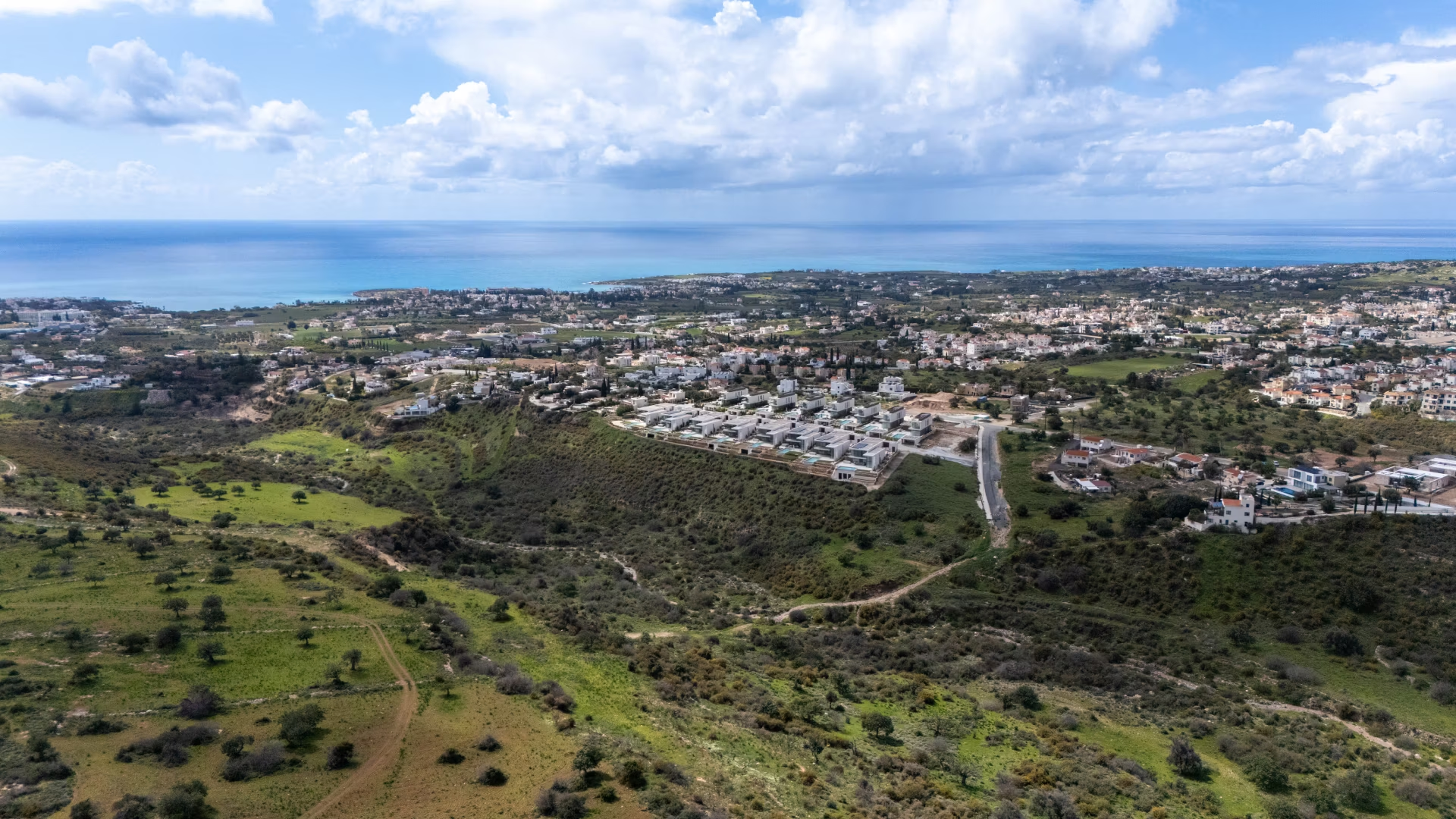
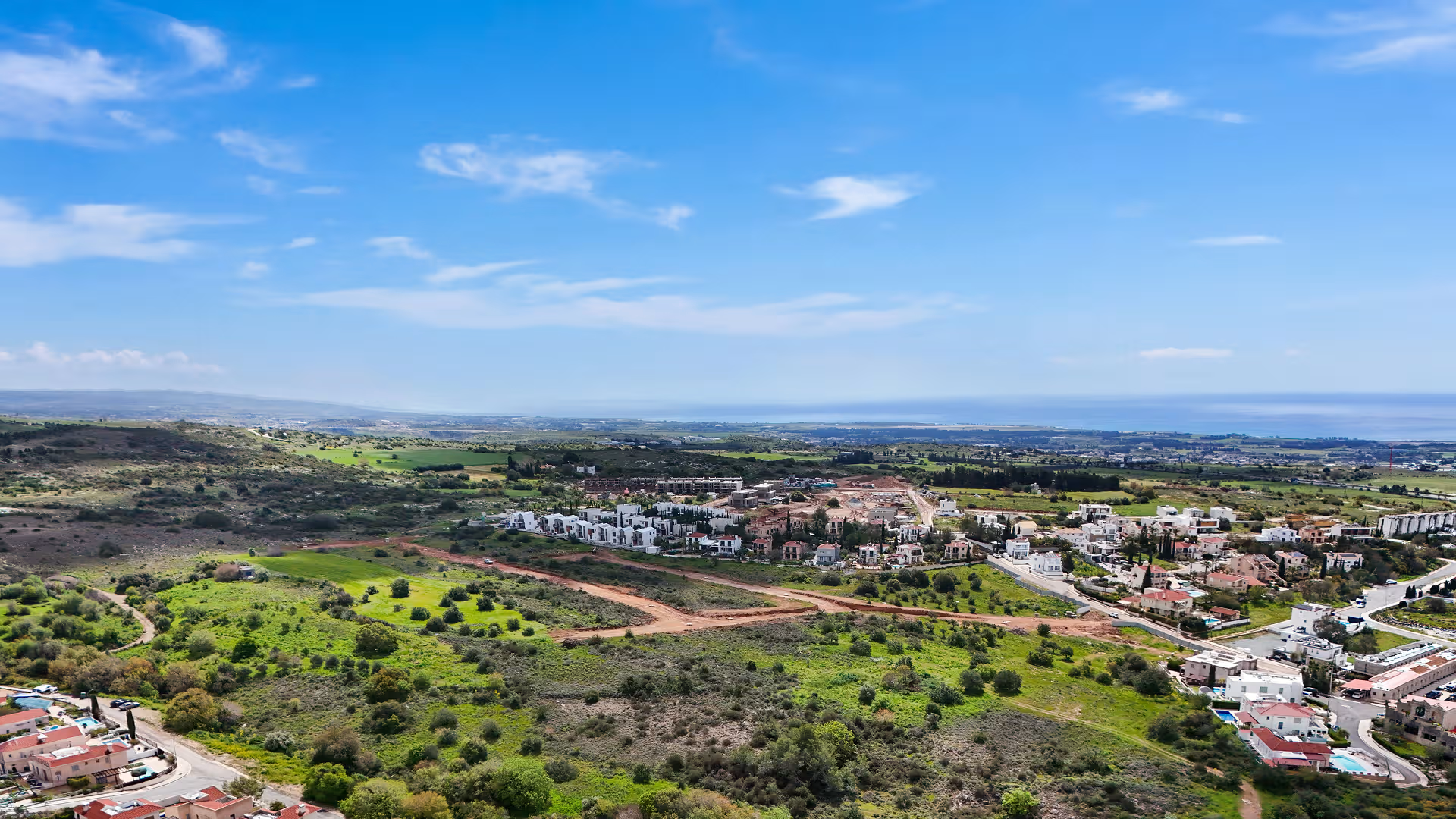
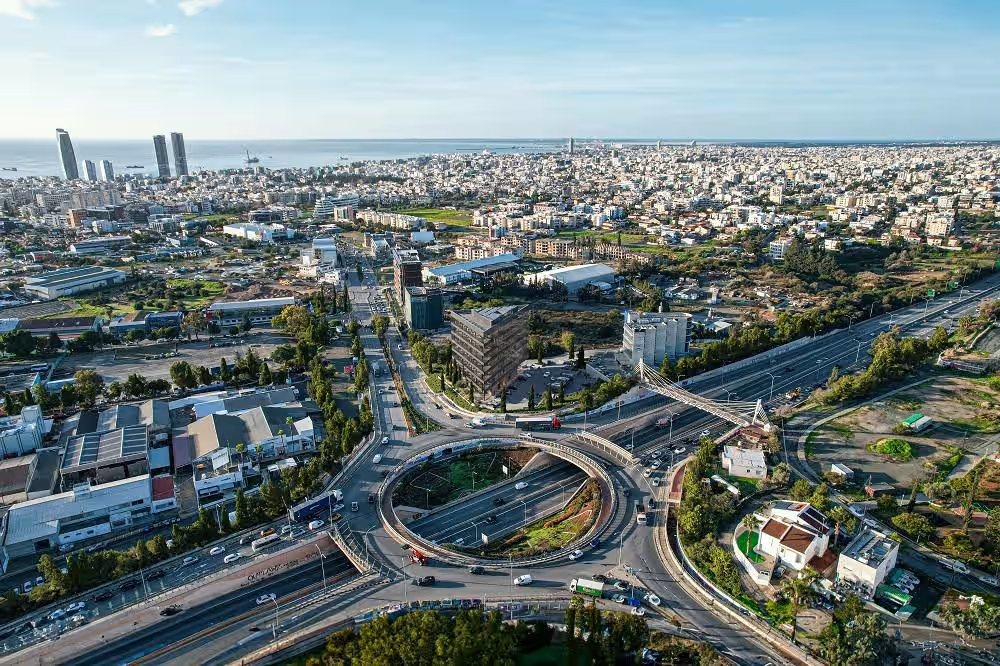
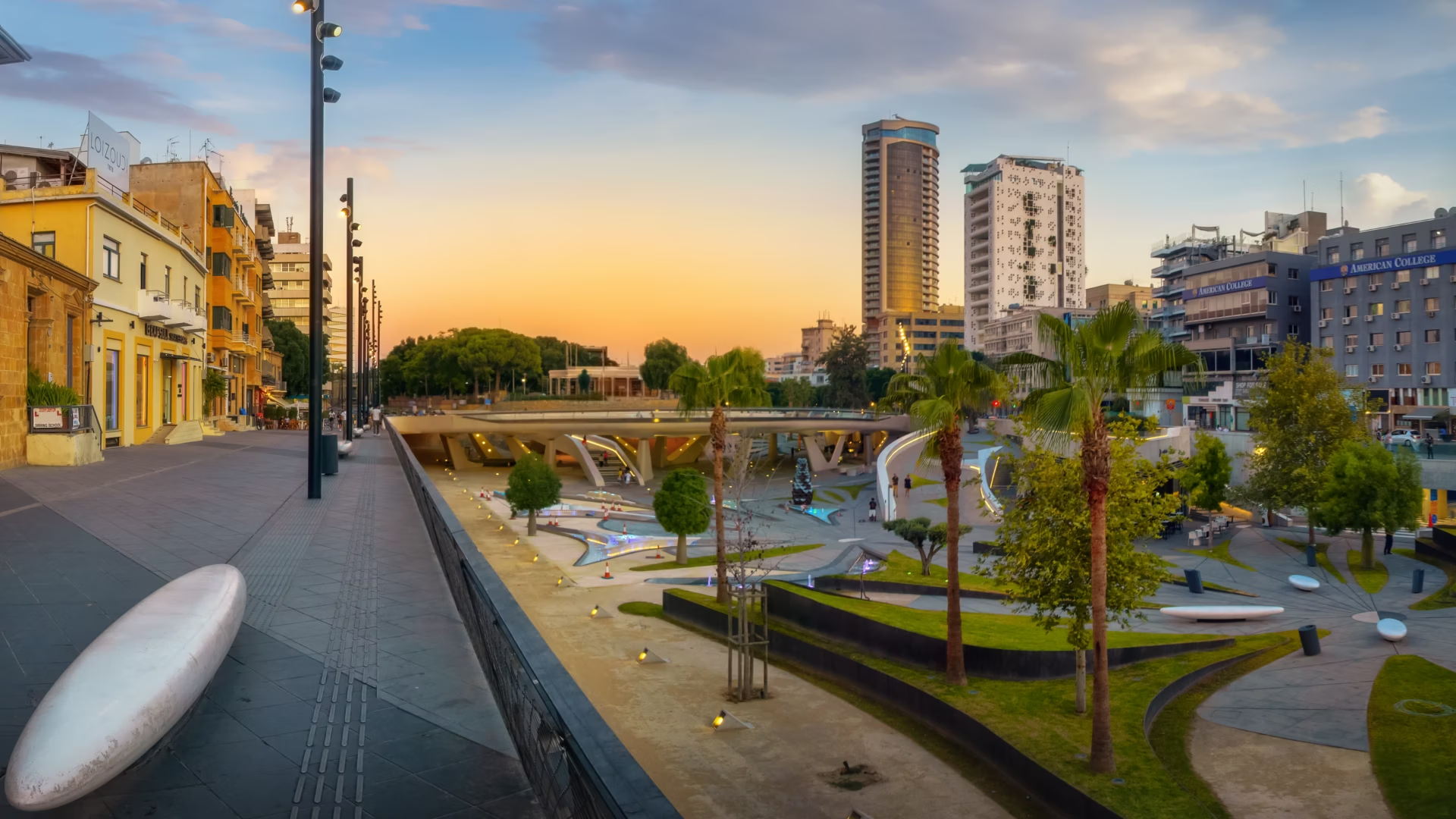
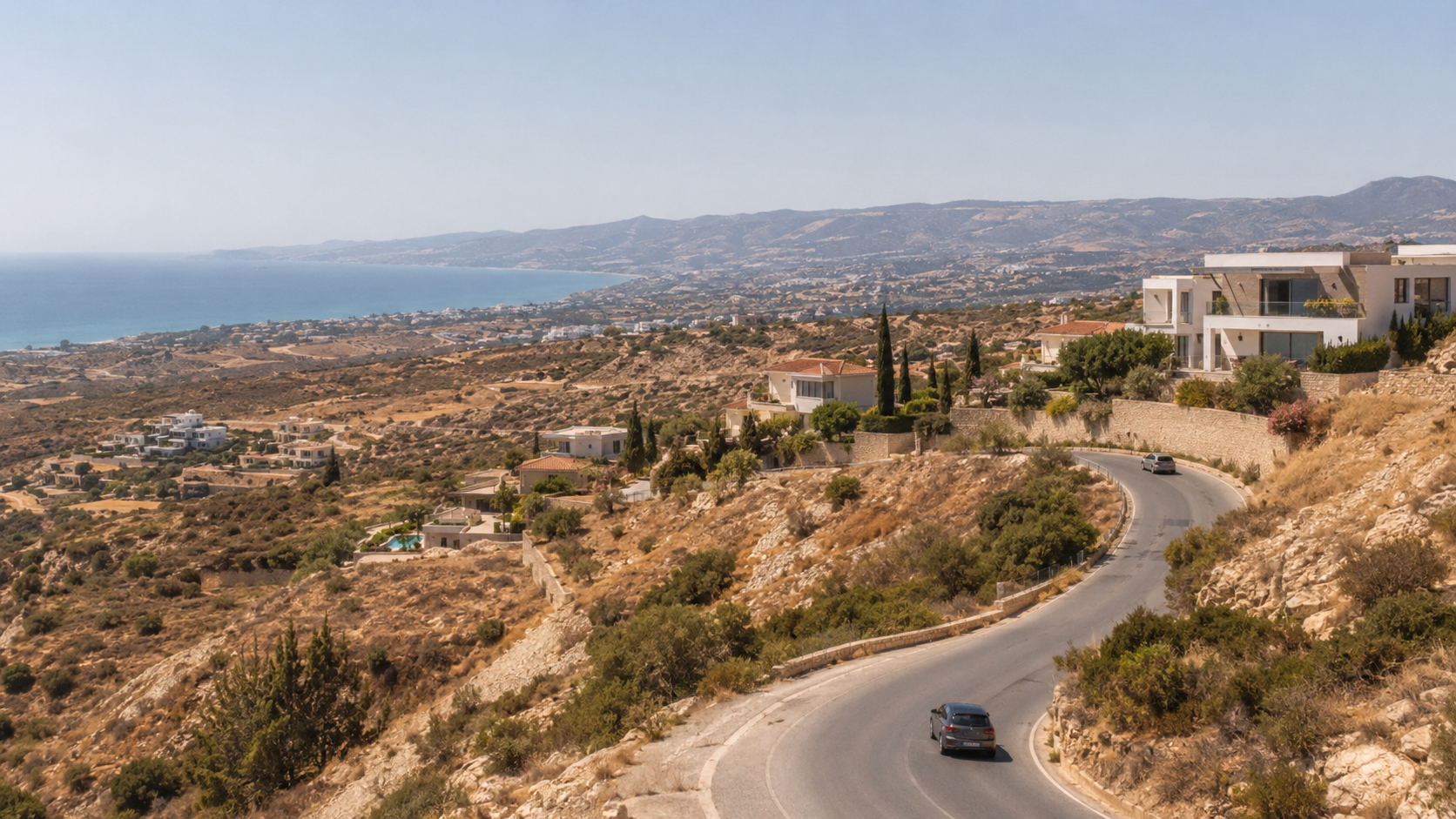
The three main cities offer distinctly different versions of Cyprus. Limassol is the business capital — cosmopolitan, fast-growing, and the most expensive: September 2026 listings put the median asking price of a two-bedroom apartment at about €445,000, against about €235,000 in Nicosia. Nicosia, the inland capital, offers the deepest job market and strong schools but no coastline and hotter summers. Paphos has the island's highest concentration of international residents, a gentler pace, and better value than Limassol, which is why it remains the default choice for relocating families and retirees.
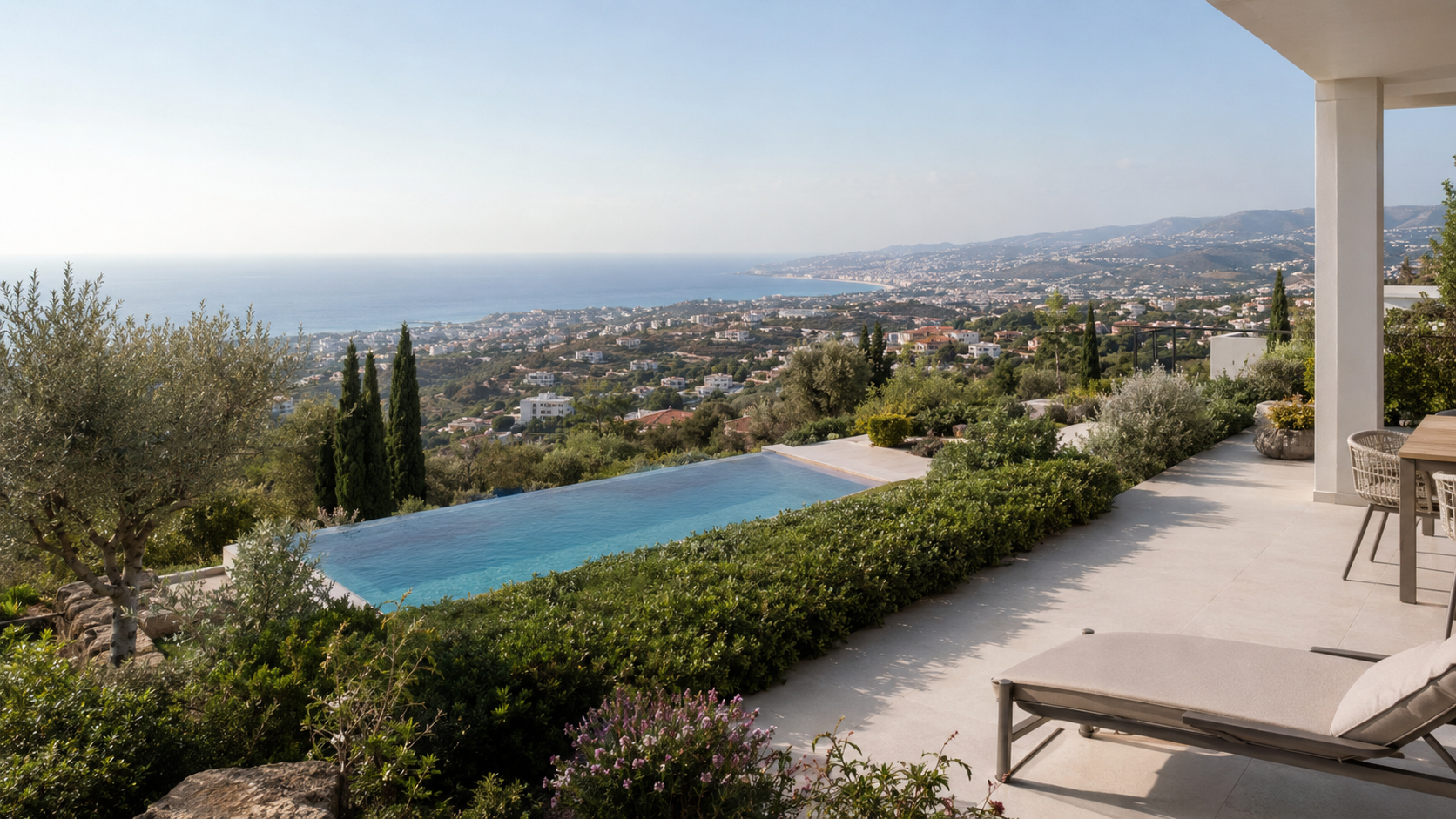
Within each region, the trade-offs repeat in miniature: seafront convenience against summer humidity, hillside coolness against a short drive to the beach, town-centre walkability against space and privacy.
How the balance shifts with your circumstances
For a UK retiree with pension income, the combination of the 5 percent pension rate, no inheritance tax, S1-funded healthcare, and a large English-speaking community is difficult to match anywhere in Europe; the heat and bureaucracy are the price. For a remote executive or business owner, non-dom treatment of dividends and interest and the 60-day rule carry the argument, provided the structure is set up properly. For families, the calculation is closer: safety, climate, and childhood freedom against school fees and the distance from grandparents.
Nationality matters too. EU citizens buy property freely and acquire residence rights with little friction. Non-EU nationals — including the British since Brexit — need permission to buy and face a residency process that rewards preparation. Our guide to living in Cyprus after moving from the UK walks through that adjustment step by step.
.png)
Frequently asked questions

The recurring ones are intense July–August heat, water scarcity, slow bureaucracy, car dependency, expensive imported goods, and low local salaries. Most are manageable with planning; none are discoveries you want to make after moving.
Yes. English is widely spoken in shops, banks, hospitals, and government offices, and legal documents are routinely available in English. Learning basic Greek is appreciated but not required for daily life.
Day-to-day living — rent, dining out, utilities, services — generally costs less than in British cities; a one-bedroom city-centre apartment rents for around €850 on average. Cars, fuel, and imported goods cost more. For most households the total comes in well below UK levels, though the gap varies with lifestyle.
Inland temperatures regularly reach 35–40°C in July and August, with humidity on the coast. Coastal breezes, elevated locations, and homes designed for the climate make it manageable, but the two peak months are demanding by northern European standards.
Cyprus ranks among the safer countries in Europe on 2026 safety indices, with low rates of violent crime. It is common for children to enjoy more independence than they would in a large UK or German city.
Yes, with permission. Non-EU buyers need government approval and are generally limited to one property. Purchasing a new property worth at least €300,000 plus VAT, with qualifying foreign income, supports a fast-track permanent residence application usually decided within months.
Not strictly, but most international residents keep private cover alongside GESY to reduce waiting times and access a wider choice of specialists. Typical premiums run from around €40 to €150 per adult per month.