


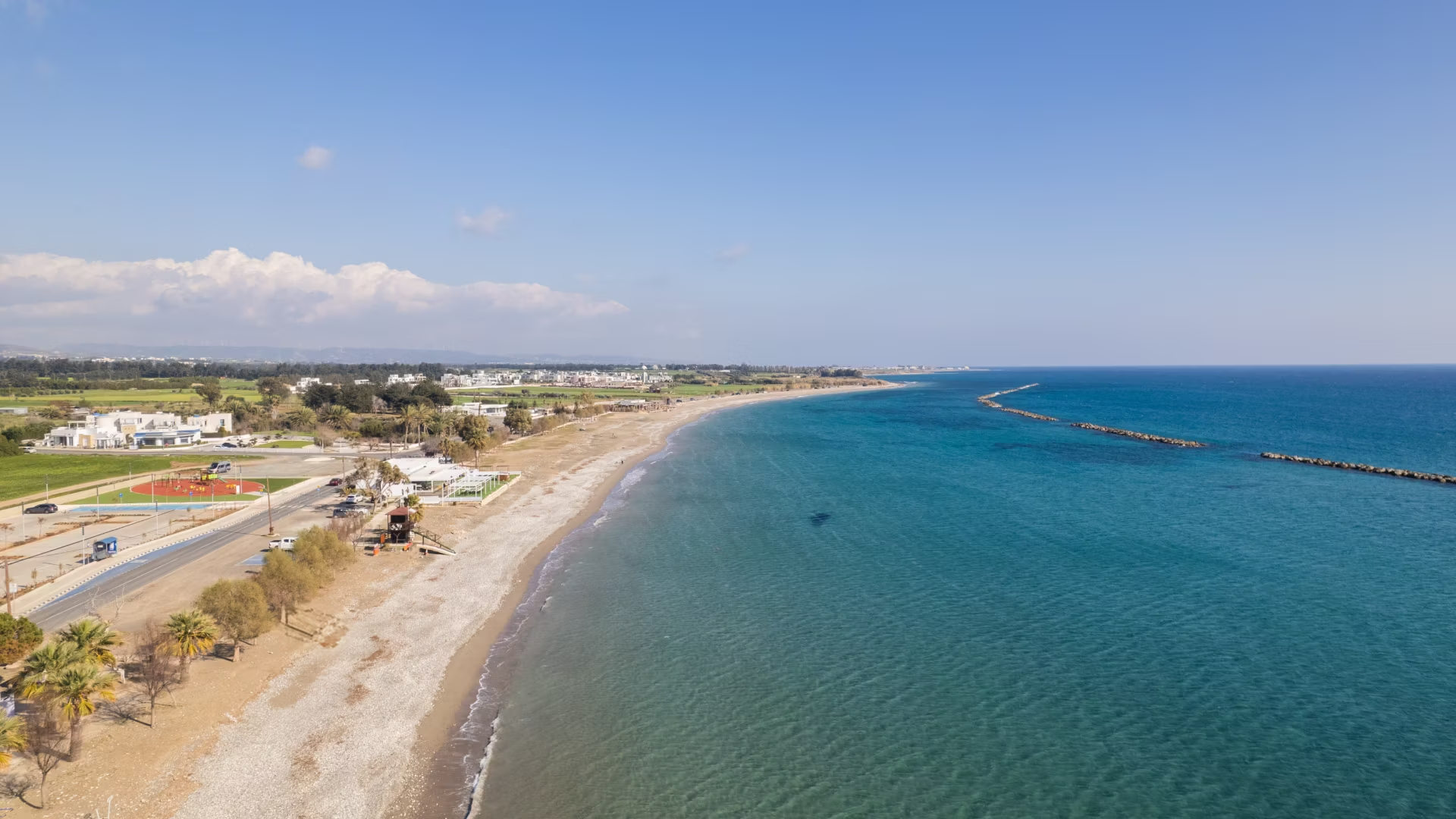





How to Live in Cyprus After Moving from the UK: What You Need to Know
Moving to Cyprus from the UK is often easier than people expect. English is widely used, people drive on the left, and many everyday things feel familiar.
But one important thing changed after Brexit. UK citizens since 1 January 2021 are treated as third-country nationals, not EU citizens. That means you cannot simply move to Cyprus and stay as before. This guide covers the parts of daily life that a UK family or retiree needs to get right in the first months - what status you need, how to access healthcare, how driving and banking work, and where British residents tend to settle.
Residency: visiting is not the same as living
This is the first thing to understand. Visiting Cyprus and living in Cyprus are not the same.
As a UK citizen, you can usually stay in Cyprus for up to 90 days in any 180-day period without a permit. But if you want to move here and stay longer, you will need a residence permit through the Cyprus migration system.
There are different ways to become a legal resident, and the right one depends on your situation.
If you are buying qualifying property at or above €300,000 and have enough income from abroad, you may be able to apply for a fast-track permanent residence route under Regulation 6(2), the mechanics are set out in our overview of permanent residence by investment. If you are moving for work or self-employment, that is a different path. Remote workers may also look at the Digital Nomad Visa, if they meet the income rules and if places are still available.
One route needs extra care. Category F is often described online as a lower-cost permanent residence option, but many older guides make it sound faster than it really is. If you are thinking about Category F, it is better to take current legal advice and not rely on promised timelines.


Request a Property Purchase Consultation
Thank you!
We will reach out soon.
Healthcare: GESY, the S1, private insurance
Cyprus has a national healthcare system called GESY. It is not fully free at the point of use. It works through contributions and co-payments.
If you work or are self-employed in Cyprus, access to GESY is usually linked to that status. For new residents and for people without a local contribution record, private health insurance is often important, especially during the immigration process.
There is an important exception for UK state pensioners. If you receive a UK State Pension, you may be able to apply for an S1 form through the NHS. Once it is properly registered, it can give access to healthcare in Cyprus on the same basis as local insured residents. It is best to check this before the move so you do not end up with a gap in cover.
It is also worth checking how a move abroad may affect NHS access during visits back to the UK. This can depend on your exact status, so it is better to confirm it in advance.
Driving and getting around
Driving in Cyprus feels familiar to many UK buyers because people drive on the left and right-hand-drive cars are common.
Your UK driving licence can usually be used for an initial period after moving, but residents should check the current exchange rules with the Cyprus Road Transport Department and not leave it until the last minute.
Bringing a UK car to Cyprus is possible, but it is not always the best option. Importing a car can trigger VAT and, in some cases, customs duty, depending on the vehicle and its origin. In many cases, buyers find it simpler to buy locally.
A car is very useful in Cyprus. Public transport exists but is very limited, especially outside big towns.
Banking and money
Opening a bank account in Cyprus is usually simple in theory, but it can take time because the paperwork is strict.
Most retail banks work in English. In most cases, you will need to visit in person with your passport, proof of address and documents showing the source of your funds. Some banks may offer remote account opening, but this is not common.
Cyprus uses the euro, so anyone living on GBP income should think about exchange-rate changes when planning a long-term budget. A UK State Pension can usually be paid into a Cyprus bank account.

Tax and tax residence
Where you pay tax depends on where you are treated as a tax resident.
In Cyprus, this is usually based on the number of days you spend in the country, although there are other rules that may apply in some cases.
Many UK buyers are interested in Cyprus because of its tax system, including the non-domicile regime in certain cases. Cyprus also does not have inheritance, estate or wealth taxes. But these outcomes depend on personal circumstances, so they should never be treated as automatic.
The UK–Cyprus double taxation treaty also matters, especially for pensions and other cross-border income. Before moving, it is sensible to speak to a Cyprus tax adviser and get advice based on your own case.
Schools and family life
If you are moving with children, schools are a major part of the decision.
State schools in Cyprus teach in Greek, so many UK families choose an international school instead. Several schools follow the UK curriculum and offer IGCSEs and A-levels. These schools can be found in the main towns, including Paphos.
For younger children, the move is often easier than parents expect. Many adjust quickly and pick up Greek alongside English.
Where British residents settle
Cyprus has a long-established British community. One of the best-known areas is Paphos and the nearby villages. This part of the island is especially popular with families and retirees.
Places like Coral Bay are well known among British residents who want a coastal lifestyle. Quieter inland areas such as Konia may appeal to buyers who want more space and a more residential setting while still staying close to town.
The island has more than three hundred days of sun a year, sea and mountains within an hour of each other, and a strong outdoor culture. The honest counterpart is the summer: July and August are genuinely hot, air conditioning becomes a necessity, and energy bills rise accordingly. For most movers the climate is a net positive, but it is worth choosing a home - whether one of the villas and houses in Cyprus or a lower-maintenance apartment - with cooling and insulation in mind.
The genuine pros and cons
The case for Cyprus is consistent: a warm climate, an English-speaking environment, a favourable tax position for many profiles, short distances, and a settled expatriate community. Cyprus also comes with some practical trade-offs. Since Brexit, the residency process takes more planning. Official paperwork is often handled in Greek, so many people use a local lawyer. A car is close to essential in daily life. But for most movers, these things become much easier after the first year.
Making Cyprus home

Living well in Cyprus after moving from the UK mostly comes down to getting the first steps right. Your residence status, healthcare, driving and banking all need to be set up properly at the start.
After that, the move usually becomes much easier. The lifestyle that attracts people to Cyprus is real. But the practical side is real too. When both are handled properly, the transition can be smooth and enjoyable.
If you are interested in a specific area or property type, you can explore current options across the Paphos region or speak with the INEX team for a considered conversation about settling in Cyprus.
.png)
Frequently asked questions

Yes. As a UK citizen, you can visit Cyprus for a limited period without a permit, but if you want to live here, you need the right residence status.
For buyers who can meet the investment and income rules, a fast-track permanent residence route may be one of the quickest options. Lower-cost routes may take longer, so it is important to check current advice rather than rely on old guides.
Not automatically. Relocating permanently can end your entitlement to free NHS treatment on visits, unless you hold a registered S1 form as a UK state pensioner or qualify under another exemption. It is worth confirming your position before you move.
For the first six months of residence. After that, the UK licence must be exchanged for a Cypriot one at a Road Transport Department office - no re-test is required, but the process should be started well before that point rather than against the deadline.
It depends on the car and the import costs. Many people buy locally because import taxes and duties can make the overall cost much higher than expected.
For everyday life, no. English is widely used, especially in the Paphos area. Greek becomes more useful for official matters and for deeper integration into local life.
Paphos and the surrounding villages are one of the main hubs for British residents. Other towns also attract British buyers, but often for different reasons and lifestyles.